
Sunday, 23 November 2014

Wednesday, 19 November 2014
Thriller Planning
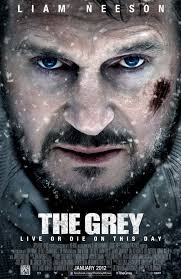
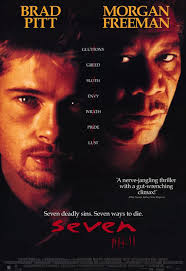
We have begun planning our thriller opening and have opted for a psychological, political hybrid. This would involve a man (protagonist) who has been experimented on by the government, for reasons that do not become clear in the opening, this information will be conveyed to the audience through the use of flashbacks which will appear frequently throughout. The story follows the protagonist's escape from the facility that was holding him. He begins hallucinating a man chasing him and tries to escape.
Friday, 7 November 2014
Barthes' Narrative Codes
Barthes' Narrative code refers to different aspects of narrative which are vital to telling the story in a piece of media. The different codes in this theory are:
Action code:
This is where the audience will recognise an action code in a media text as it is used to indicate the next logical step. For example in my preliminary task we used the opening of a door to indicate a confrontation or conversation becoming imminent between two characters. Particular for my narrative a very tense and awkward conversation.

Action code:
This is where the audience will recognise an action code in a media text as it is used to indicate the next logical step. For example in my preliminary task we used the opening of a door to indicate a confrontation or conversation becoming imminent between two characters. Particular for my narrative a very tense and awkward conversation.
The Mystery or Enigma Code:
This code is used to explain the narrative by controlling what and how much information is given to the audience. The audience's attention is grabbed by setting up a problem that needs resolving during the course of the narrative. In my task the identity of the drug dealer remains a mystery until the end where he takes his hood down and deals.
The Semic Code:
This code is about symbolism and the hidden meanings in the piece. For example a knife could symbolise violence. My piece included the use of an old tattered bag which symbolised holding something of importance.
The Cultural Code:
This code refers to the class and social status of the characters and will make sense to an audience of a similar or identical social class. For example we used a hoodie and tattered bag for the dealer to show him as being middle or lower class as it is a general stereotype.
Code of Opposition:
This refers to binary opposites throughout the narrative. For example black vs. white, Male vs. female etc. I did not use this in my preliminary task and it is something I will consider in the future.
Monday, 3 November 2014
Titling work
After exploring the different ways to create titles for a video in after effects I managed to come up with these titles.
Sunday, 2 November 2014
Preliminary task evaluation
My Preliminary task evaluation:
https://www.slideshare.net/Mattw0130/as-preliminary-evaluation-41020551
https://www.slideshare.net/Mattw0130/as-preliminary-evaluation-41020551
Friday, 10 October 2014
Story Board
We have decided to base our continuity task around a drug deal in which the dealer makes his way to a room, walks In to find the buyer where they negotiate a price for the purchase.


Thursday, 9 October 2014
Continuity task
We have been set a continuity task that involves filming and editing a character opening a door, crossing a room and sitting down in a chair opposite another character with whom he/she then exchanges a couple of lines of dialogue. The task must include examples of match on action where the editor cuts from one shot to another view that matches the first shots action, giving an impression of continuous time. 180 degree rule where two characters in the same scene should have the same opposite relationship to each other. Shot reverse shot which is a continuity editing technique used in conversations of simply characters looking at each other or objects (shows what they're looking at)
Subscribe to:
Posts (Atom)